
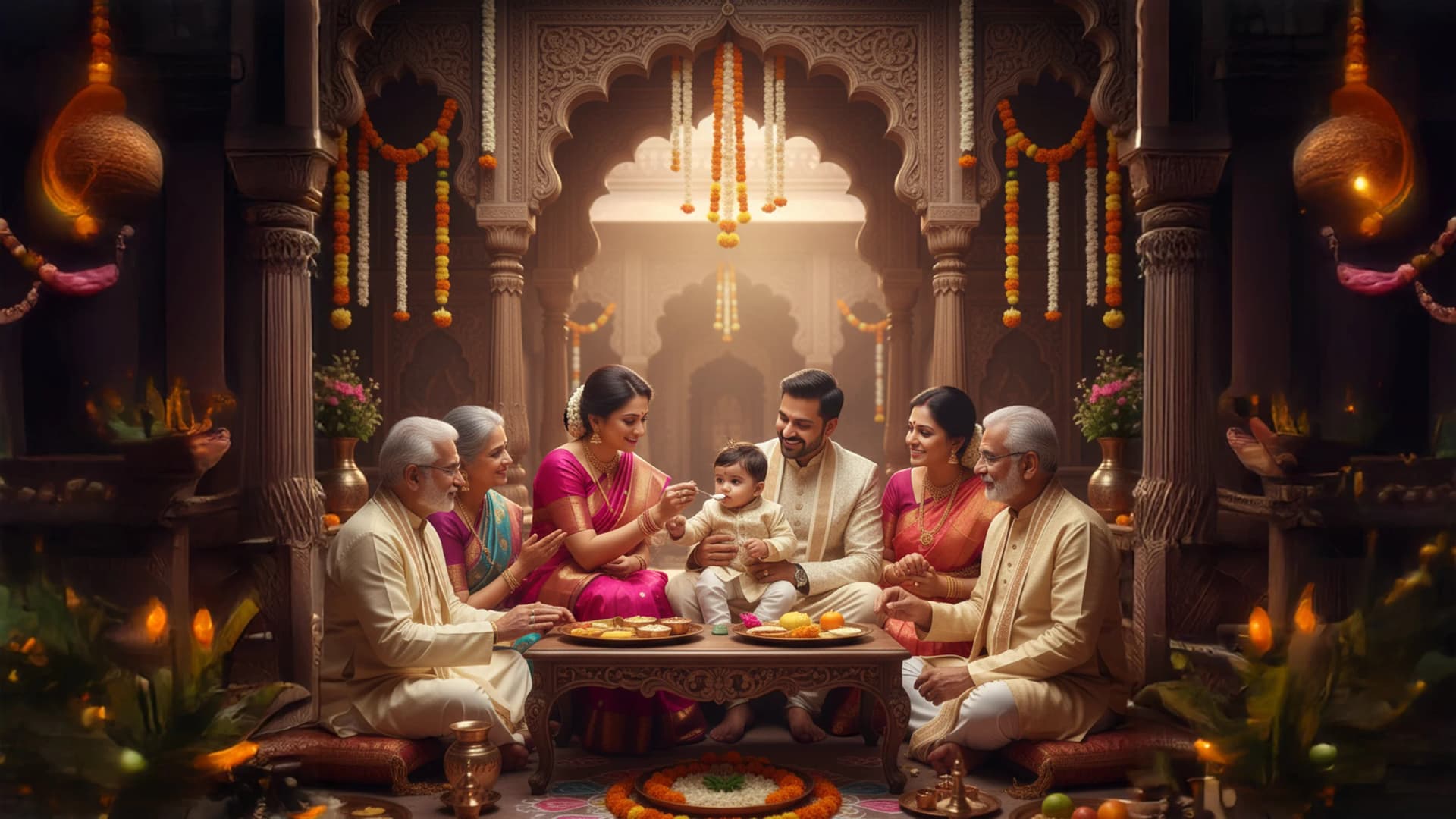
Bless Your Child’s First Sacred Milestone with Annaprashan Sanskar Vidhi
Mark your baby’s rice feeding ceremony with Vedic rituals that invite health & prosperity.
What is Annaprashan Ceremony?
Annaprashan Sanskar is a traditional Hindu ceremony that marks a baby's first intake of solid food.
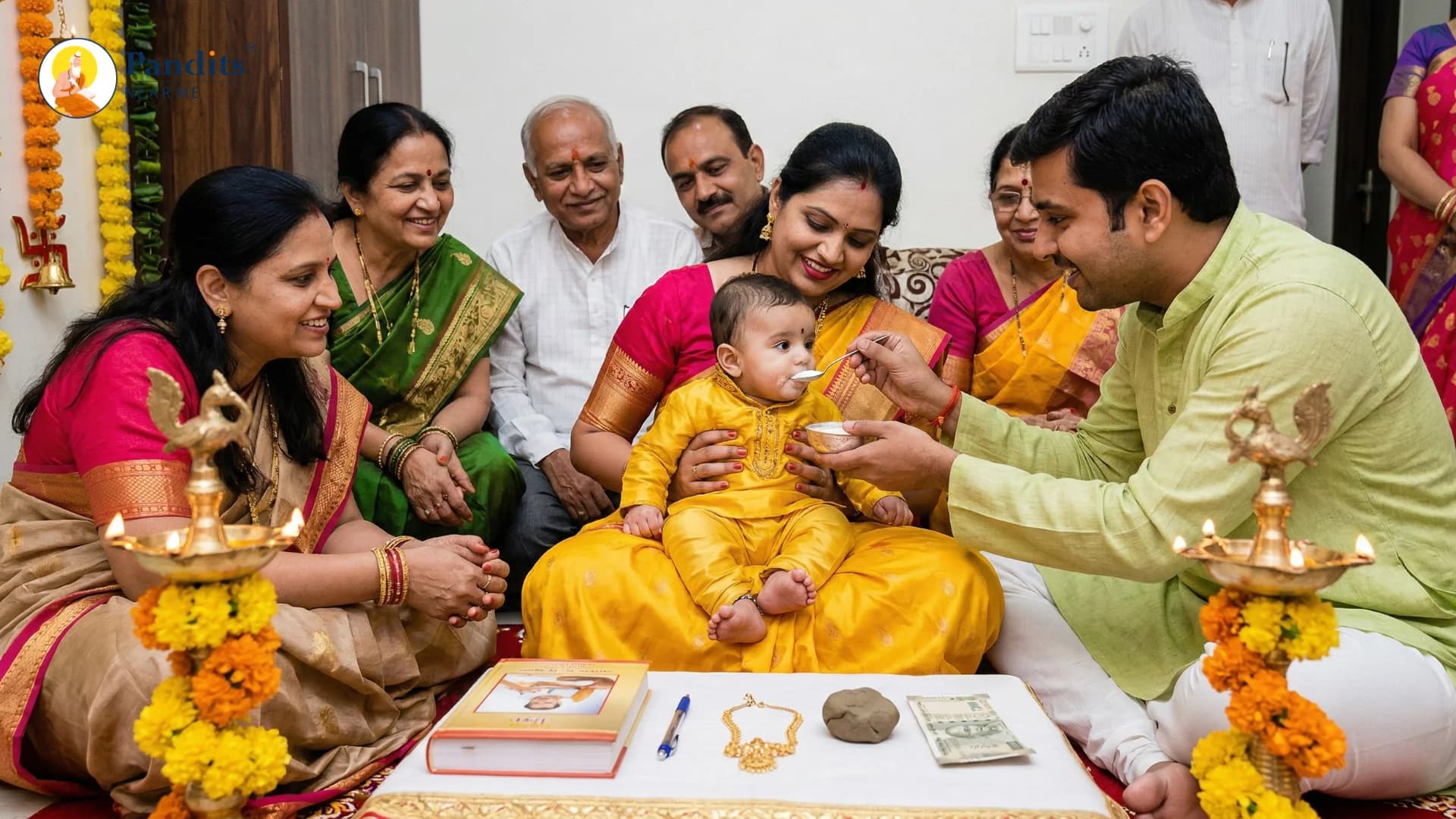

Significance of Annaprashan Sanskar Vidhi
The Annaprashan Sanskar Vidhi, or as it is commonly known, rice feeding ceremony, holds a lot of cultural and spiritual significance. It is believed that the rice ceremony will bless the child with a healthy and prosperous life. The rice feeding ceremony also marks the child's transition from mother's milk to solid foods, which signifies growth and development. With Annaprashan Sanskar Vidhi, family and close friends bless the child by performing a puja. The rice ceremony is often accompanied by Saraswati Puja, invoking the goddess of knowledge and wisdom. The Annaprasa for baby is a joyous celebration, reflecting the community's prayers for the child's healthy future.
Where is Annaprashan Sanskar Vidhi/ Rice Feeding Ceremony Performed?
The Annaprashan Sanskar Vidhi is typically performed at various locations depending on regional customs and family preferences. Traditionally, it is performed at maternal grandparents' or Uncle's home. Some modern family's even book a banquet hall, party hall, or a temple for the rice feeding ceremony to celebrate this event largely.
Annaprashan Sanskar Vidhi Steps
Here are a few steps that are involved in Annaprashan Sanskar Vidhi:
Choosing the Date
Parents consult a Pandit or an astrologer to select an auspicious data for the ceremony. This way, the baby receives the blessings at a holy time and day.Preparation
Preparations need to be made before the ceremony can even begin. This includes gathering all necessary items, like rice, ghee, honey, yoghurt, and silverware for the baby to be fed on the Annaprashan Sanskar Vidhi.Puja
The Pandit Ji then begins the ceremony with Saraswati Puja and prayer to invoke blessings for the baby as they transition into eating solid food.Feeding the Baby
Typically, the maternal uncle or a family elder feeds the baby the first morsel of rice kheer, which signifies the start of the baby's consumption of solid food. This can also change depending on regional customs and family preferencesBlessings
Family members take turn feeding the baby with rice kheer and offer their blessings on this auspicious day.Celebration
The Annaprashan Sanskar Vidhi usually ends with a celebratory meal for family and friends. Parents also choose to do a annaprasana for baby photoshoot.
Why is Rice Kheer/ Annaprasana for Baby Important?
The reason rice kheer is usually selected for an Annaprashan Sanskar Vidhi is because it is made of simple ingredients, is easy to digest, and has a soft mushy texture which makes it very easy for the baby to eat or swallow. The creamy and sweet rice pudding is often prepared with nutritious ingredients such as ghee, sugar, and nuts. It is believed that the baby will experience happiness and prosperity because of the pleasant flavor of kheer. A very important component of the Annaprashan Sanskar Vidhi, feeding the baby kheer is also considered to be a means of blessing and good fortune for the child.
Annaprasana for Baby Boy vs Baby Girl
Though the rice feeding ceremony largely remains the same, the timing and attire may differ for the annaprasana for baby girl or baby boy. The rice ceremony occurs between the age of 5 to 8 months for girls and 6 to 9 months for boys.
Why Choose Us?
For authentic rituals, trusted pandits, and a seamless experience that bring divine blessings to your life.
10+
Google Ratings
500+
Get Instant Panditji
100+
Pooja Available
100+
Verified Panditji
Loading reviews...
Frequently Asked Questions
Annaprashan, or rice feeding ceremony, is a Hindu ritual that marks an infant's first introduction to solid food.
The rice ceremony should occur between the age of 5 to 8 months for girls and 6 to 9 months for boys.
By setting up the area, invoking the gods, reciting mantras and prayers, and feeding the child in the end.


Get Your
FREE
Janam Kundali



 100% Accurate Predictions
 Trusted by Lakhs of Users
 Secure & Private
 24×7 Expert Support100% Accurate PredictionsTrusted by Lakhs of UsersSecure & Private24×7 Expert Support100% Accurate PredictionsTrusted by Lakhs of UsersSecure & Private24×7 Expert Support
Book Your Puja
Fill the form below and we will contact you soon