
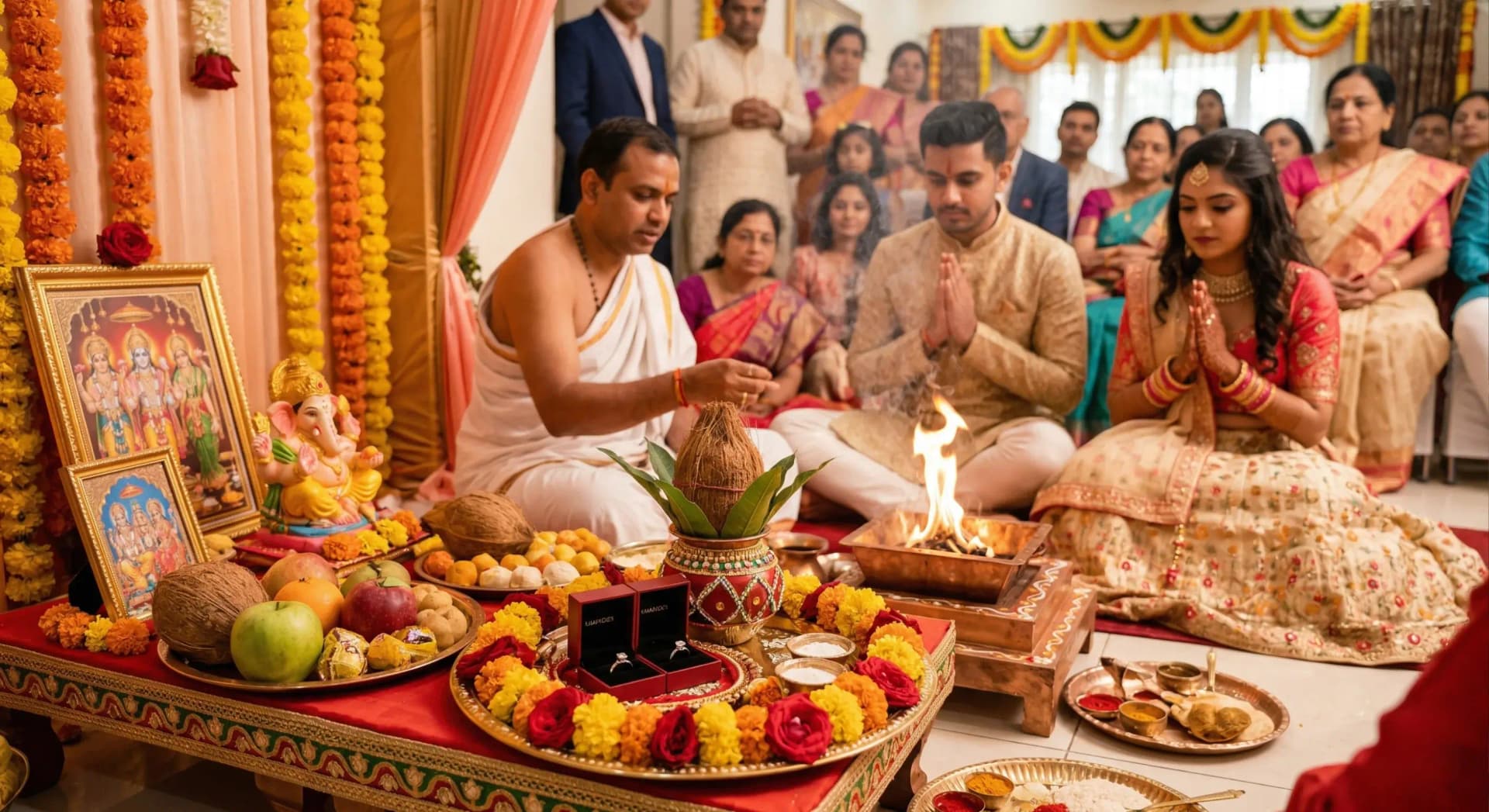
Celebrate the Sacred Bond with Divine Blessings Through Engagement Puja
Perform a traditional Engagement Pooja to invite positivity and remove obstacles from your union.
What is Engagement Puja?
Engagement pooja is a sacred Hindu ritual performed before or during engagement to seek divine blessings, ensure harmony, and remove obstacles for the couple.
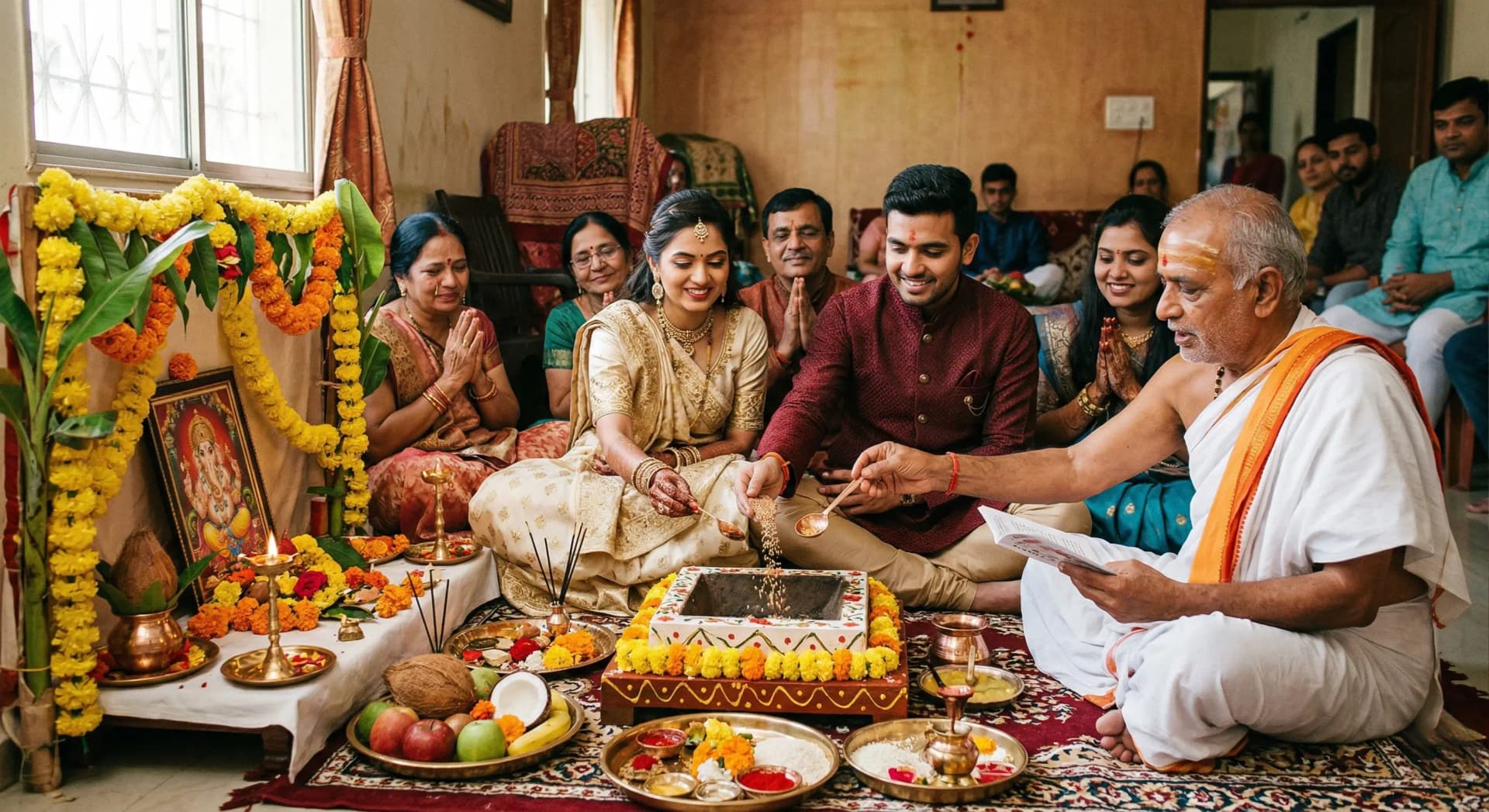

Key Rituals in Sagai Ceremony
Ganesh Puja : The engagement ceremony Indian puja begins with the invocation of Lord Ganesha, who is worshipped as the remover of obstacles. This ritual purifies the environment, invites positive energy, and ensures that the engagement ceremony proceeds smoothly without any obstacles or hindrances. Sankalp : In this important step of the roka ceremony, both families declare their intention to unite the couple in marriage. The pandit ji chants Vedic mantras while the couple and their families take a sacred vow, marking the spiritual beginning of their lifelong commitment. Var & Vadhu Aashirvad : Both the bride and groom seek blessings from elders of both families. This engagement puja ceremony step symbolizes acceptance, love, and guidance, ensuring the couple receives emotional and spiritual support as they step into a new phase in life. Ring Ceremony : One of the most cherished moments of an engagement ceremony Indian is when the couple exchange rings as a symbol of mutual love, trust, and commitment. This ritual signifies the couple’s acceptance of each other as life partners in the presence of daily and divine blessings. Tilak Ceremony : The groom is warmly welcomed by the bride’s family with a ceremonial tilak on his forehead. This ritual represents respect, honor, and the formal acceptance of the groom into the bride’s family. Offering to Deities : The ceremony concludes with the offerings of fruit, sweets, flowers, and sacred items to the deities. Prayers are offered for prosperity, happiness, and harmony in the couple’s life, especially seeking the blessings of Goddess Lakshmi for abundance and well-being.
Essential Indian Engagement Ceremony Puja Samagri
The below items are used during different rituals to invoke blessings, maintain purity, and complete the Indian engagement ceremony as per Vedic customs.
- Kumkum, Haldi, & Chandan
- Fresh Flowers & Garlands
- Coconut
- Betel Leaves and Nuts
- Fruits & Sweets
- Diya & Incense Sticks
- Kalash
- Akshat
- Moli
- Ghee
Engagement Puja Ceremony Muhurat
Choosing the right muhurat is very important when you are planning an engagement pooja, as it ensures the ceremony is aligned with positive cosmic energies.
How Muhurat is Decided
The ideal timing is carefully calculated by a pandit or astrologer based on: - Kundali matching of the bride and groom - Favorable Tithi, Nakshatra, and Day - Planetary positions that support love, commitment, and long-term harmonyPeriods to Avoid
Certain time frames are generally avoided to maintain auspiciousness: - Rahu Kaal - Amavasya in some traditions - Inauspicious planetary combinations or doshasRegional Variations of Engagement Puja Ceremony
Engagement Puja rituals may share a common spiritual essence, but their customs and celebrations differ drastically across various regions and cultures of India. Each tradition adds its own cultural richness to the ceremony.North India - Roka/ Sagai Ceremony
Engagement ceremony Indian, primarily North India, is commonly referred to as Roka or Sagai. The ceremony focuses on the formal approval of the alliance between families, with rituals often including tilak, exchange of gifts, and blessings from elders, followed by a ring ceremony.South India - Nischitartham
In South India, the engagement ceremony is called Nischitartham. It is a more structured ritual where a pandit ji formally announces the alliance, reads the Lagna Patrika (wedding agreement), and performs Vedic rituals to bless the happy couple.In Gujarat - Chandlo Matli Ceremony
In Gujarati culture, the engagement includes the Chandlo Matli Ceremony, where the bride’s family visits the groom’s home with gifts, sweets, and other auspicious items. The groom is honored with a Chandlo (tilak), symbolizing acceptance and celebration of the union.Maharashtra - Sakhar Puda
In Maharashtrian tradition, the engagement is known as Sakhar Puda. The bride is gifted a saree and sweets, symbolizing sweetness and happiness in the upcoming married life. The couple then exchanges rings in the presence of family.
Why Choose Us?
For authentic rituals, trusted pandits, and a seamless experience that bring divine blessings to your life.
10+
Google Ratings
500+
Get Instant Panditji
100+
Pooja Available
100+
Verified Panditji
Loading reviews...
Frequently Asked Questions
It is not mandatory, but it is highly recommended for an auspicious and blessed beginning.
Yes, both are usually performed on the same day as part of the celebration.
A qualified pandit conducts the rituals, with participation from both families.


Get Your
FREE
Janam Kundali



 100% Accurate Predictions
 Trusted by Lakhs of Users
 Secure & Private
 24×7 Expert Support100% Accurate PredictionsTrusted by Lakhs of UsersSecure & Private24×7 Expert Support100% Accurate PredictionsTrusted by Lakhs of UsersSecure & Private24×7 Expert Support
Book Your Puja
Fill the form below and we will contact you soon