
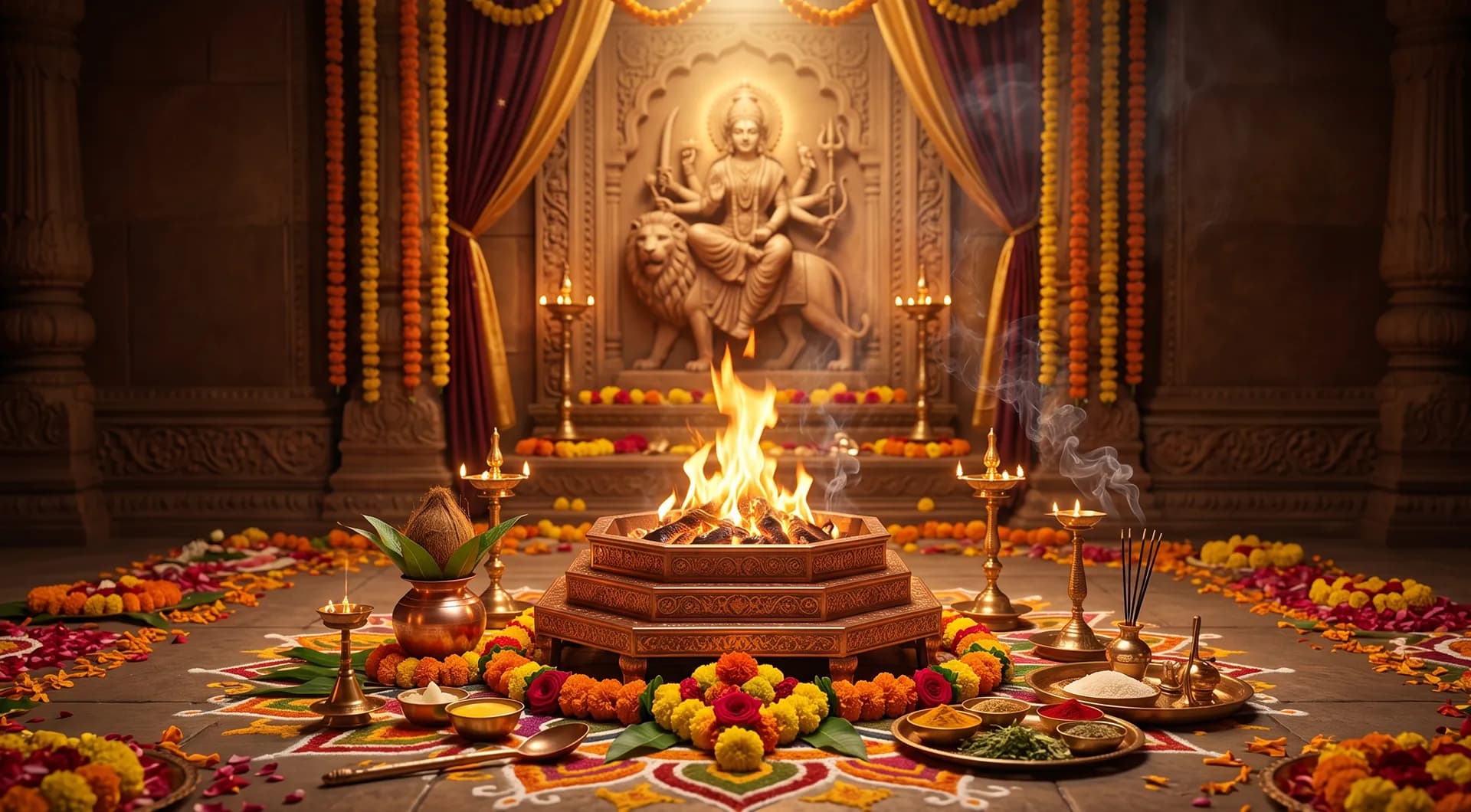
Nava Chandi Homam for Divine Blessings, Protection & Spiritual Well-Being
Book a traditional Nav Chandi Yagna at your home and seek divine blessings of Goddess Chandi for your family.
What is Nava Chandi Homam?
Navachandi Homam is a sacred fire ritual dedicated to Goddess Chandi, performed with traditional mantras, prayers, and offerings.

Significance of Nava Chandi Homam
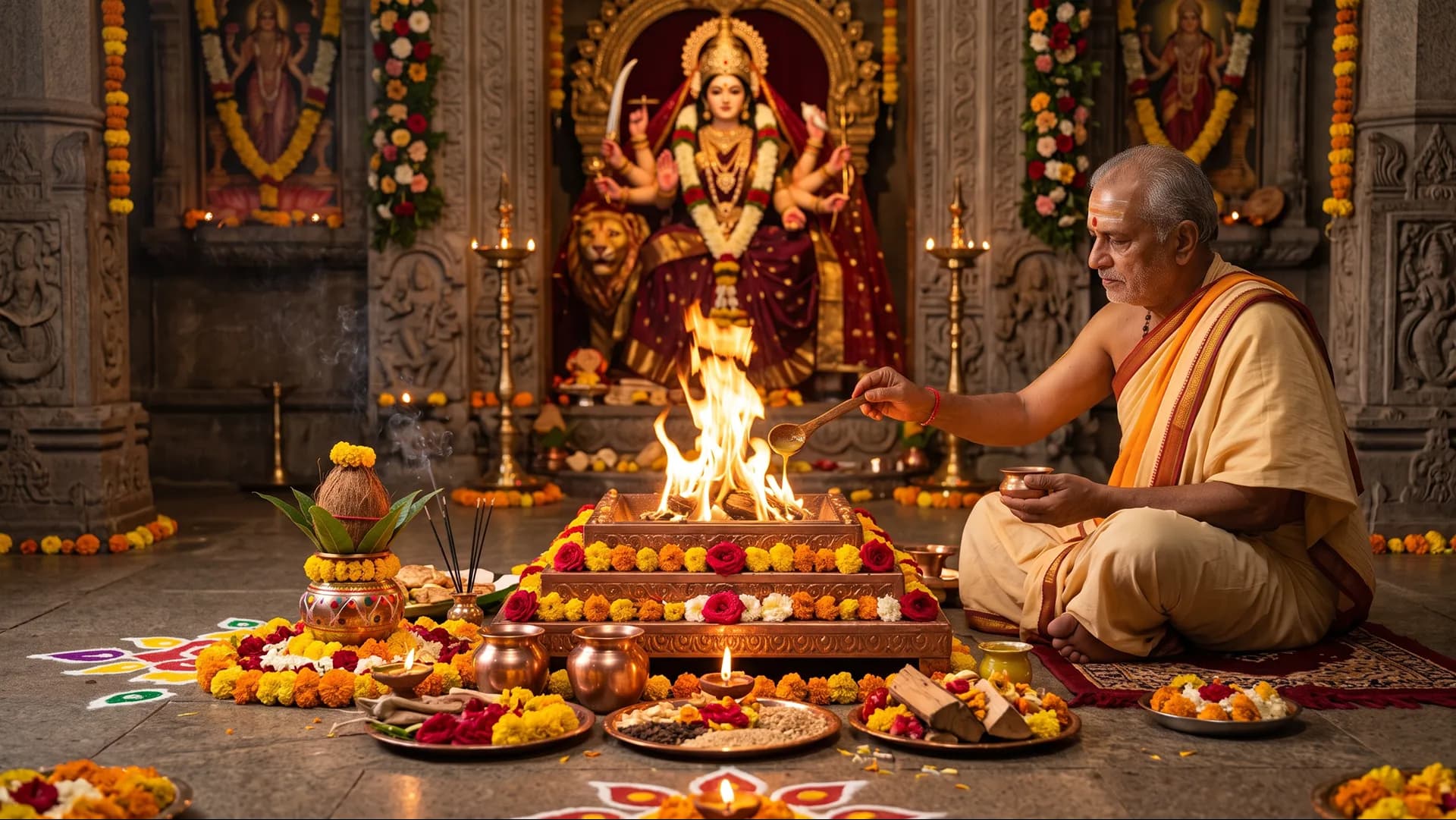
The significance of Nava Chandi Homam lies in its traditional association with the worship of Goddess Chandi, a powerful form of Devi. This elaborate ritual combines sacred fire offerings, mantra recitation, prayers, and other prescribed ceremonies to invoke the blessings of the Goddess. Devotees traditionally performed it to seek divine grace, spiritual strength, protection, and peace for themselves and their families. The ritual is closely connected with Navchandi Puja, an important form of Devi worship that involves prayers and offerings dedicated to Goddess Chandi. The sacred fire used during the homam is considered an important part of the ceremony, as offerings are made while specific mantras are chanted according to the prescribed procedure. A Navachandi Yagna may be performed during auspicious occasions, Navratri, significant family events, or when devotees wish to undertake an elaborate form of Devi worship. Depending on the family tradition and the guidance of the performing pandit, the rituals, recitations, and duration may vary. Beyond the ceremonial aspects, Nava Chandi Homam holds spiritual importance for devotees who wish to deepen their connection with Goddess Chandi. Families may also choose to perform the homam at home, allowing family members to participate in the prayers and receive the traditional blessings associated with the ceremony.
Navachandi Yagna Samagri List
Below, you will find the general samagri list required for Navachandi Homa booking:
- Kalash and sthapana items
- Mango leaves and coconut
- Flowers and garlands
- Fruits and other offerings
- Turmeric and Kumkum
- Rice and whole grains
- Betel leaves and nuts
- Sandalwood and sacred thread
- Ghee for the homam
- Camphor
- Incense sticks and dhoop
- Navadhanya
- Dry fruits and sweets
- Panchamrit
- Devi idols or pictures
- Chandan and other puja items
- Wood for the sacred fire
- Purnahuti samagri
Nava Chandi Homam Procedure
The Nava Chandi Homam procedure involves a series of traditional rituals performed to worship and invoke Goddess Chandi. The exact sequence may vary according to the pandit’s tradition and the specific form of Navchandi Havan being performed. A typical ceremony includes the following steps:
Sankalpam
The ceremony begins with a sankalpam, where the devotee states the intention and purpose of performing the homam before beginning the main rituals.Ganapati Puja
Lord Ganesha is worshipped at the beginning of the ceremony to seek blessings for an auspicious and uninterrupted ritual.Kalash Sthapana
A sacred kalash is prepared and installed as part of the ritual, representing divine presence and purity during the ceremony.Devi Avahana
The pandit invokes Goddess Chandi through prescribed mantras and prayers, formally beginning the central Devi worship.Navchandi Path
Relevant verses and mantras associated with Devi worship are recited according to the prescribed tradition, accompanied by offerings and prayers.Nava Chandi Homam
Sacred offerings such as ghee, herbs, grains, and other homam samagri are offered into the fire while specific mantras are chanted.Purnahuti
The main fire ritual concludes with the purnahuti, a final and significant offering made into the sacred fire.Aarti and Prasad
The ceremony concludes with Devi aarti, prayers, and distribution of prasad among the devotees.
When is Nava Chandi Homam Performed?
Navchandi Yagna or Homam is traditionally performed on auspicious occasions and during periods considered favorable for Devi worship. The appropriate date and timing may vary based on the purpose of the ritual, family traditions, and guidance from a qualified pandit.
Navratri:
The nine-day festival dedicated to Goddess Durga is considered an important period for Devi-related rituals.Auspicious Muhurat:
Families may perform the homam on a date and time selected according to the Hindu Panchang.New Beginnings:
It may be performed before significant events such as starting a new venture, moving into a new home, or undertaking an important family occasion.Special Family Prayers:
Families may arrange the homam when seeking traditional prayers and blessings for peace, prosperity, and well-being.Devi Festivals:
Other occasions dedicated to Goddess Durga or Chandi may also be chosen for the ceremony.
Book a Pandit for Nava Chandi Homam with Pandits Near Me
- Book a pandit for your Nava Chandi Homam through Pandits Near Me and arrange a traditional ceremony based on your family’s requirements. Share your preferred date, location, language, ceremony type, and other requirements to get connected with a suitable pandit. Pandits are matched based on factors such as their expertise, availability, and your preferred puja language.
- Before confirming your Navachandi Homa booking, you can discuss the Nava Chandi homam procedure, ceremony duration, samagri requirements, and applicable Nava chandi homam cost with us. You can choose to have the ceremony performed at your home, allowing your family to participate in the prayers, mantra recitation, and sacred fire offerings.
- Whether you are planning the homam for a special occasion, an auspicious beginning, or traditional Devi worship, Pandits Near Me helps you coordinate the ceremony with a suitable pandit. You can also communicate your regional and language preferences while planning the ritual, making it easier to arrange a Nava Chandi Homam that follows your family’s customary practices.
Why Choose Us?
For authentic rituals, trusted pandits, and a seamless experience that bring divine blessings to your life.
10+
Google Ratings
500+
Get Instant Panditji
100+
Pooja Available
100+
Verified Panditji
Loading reviews...
Frequently Asked Questions
Nava Chandi Homam and Navchandi pooja are closely related forms of Devi worship, but they can involve different rituals and procedures. The homam specifically includes sacred fire offerings, while the overall puja may include additional forms of worship.
The ritual is associated with the worship of Devi through nine forms or aspects, representing different manifestations of divine feminine energy. The specific forms and recitations can vary according to the tradition followed by the performing pandit.
Yes, Nava Chandi Homam can be performed at home when there is adequate space for the sacred fire and the required arrangements. A pandit can guide the family regarding the appropriate setup, samagri, and ritual requirements.


Get Your
FREE
Janam Kundali



 100% Accurate Predictions
 Trusted by Lakhs of Users
 Secure & Private
 24×7 Expert Support100% Accurate PredictionsTrusted by Lakhs of UsersSecure & Private24×7 Expert Support100% Accurate PredictionsTrusted by Lakhs of UsersSecure & Private24×7 Expert Support
Book Your Puja
Fill the form below and we will contact you soon