
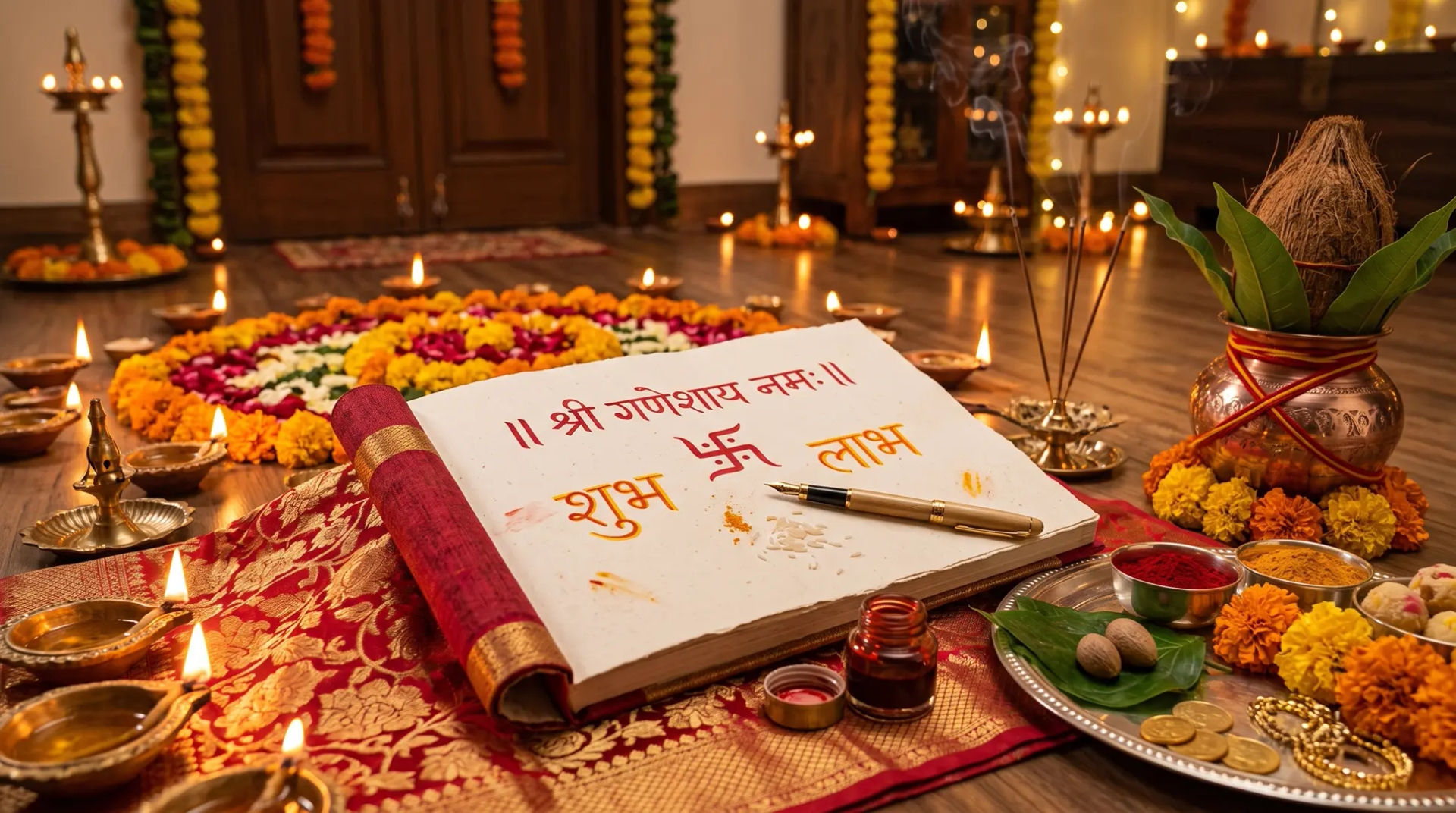
Chopda Pujan Book a Pandit at Your Shop, Home or by Video Call
Worship your new account books with Lakshmi, Ganesha and Sharda on Diwali, and open the business year the traditional way.
Book Your Puja
Tailored spiritual experiences for every need

What Is Chopda Pujan?
Chopda Pujan, also called Sharda Pujan, is the Diwali worship of new account books in which Gujarati, Marwari and Jain business families honour Lakshmi, Ganesha and Sharda, write Shubh Labh with a swastik and make the year's first entry.
Chopda Pujan Samagri List
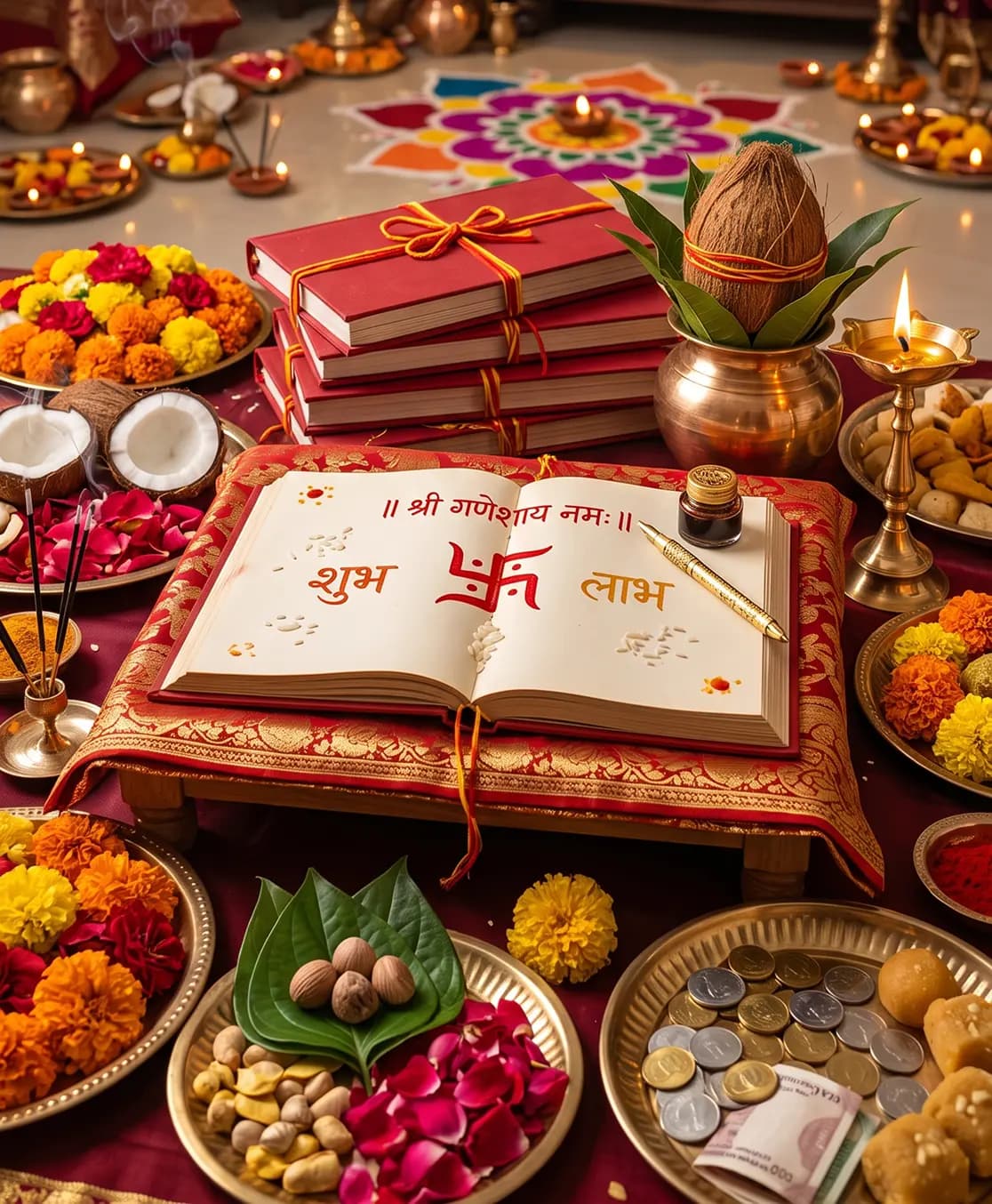
Chopda Pujan uses the usual Lakshmi puja items, plus a few things for the books themselves, listed first.
- New chopda, bahi or ledger (the books being worshipped; a diary, school books or a laptop can take their place)
- New pen with red ink, or a reed kalam (for writing the first page)
- Kanku or kumkum (for the swastik and the tilak on each book)
- Abil and gulal (white and pink powders placed on the books)
- Silver coin (kept on the book as a sign of Lakshmi)
- Image or idol of Lakshmi, Ganesha and Sharda (the three deities of the puja)
- Nagarvel paan and sopari (betel leaves and betel nut, offered to the deities)
- Mauli or nada chhadi (sacred red thread tied on the books)
- Akshat (unbroken rice)
- Lotus and marigold flowers (the lotus is Lakshmi's flower)
- Kalash with water, mango leaves and a coconut
- Ghee diya and incense sticks
- Red cloth and a bajot (low wooden stool) for the books
- Sweets, batasha and dry fruit for prasad
In India, you can select 'Book Puja With Samagri: Yes' on the booking form. Outside India, families can arrange the puja items themselves or request the pandit ji to bring them.
What to Write in Chopda Pujan
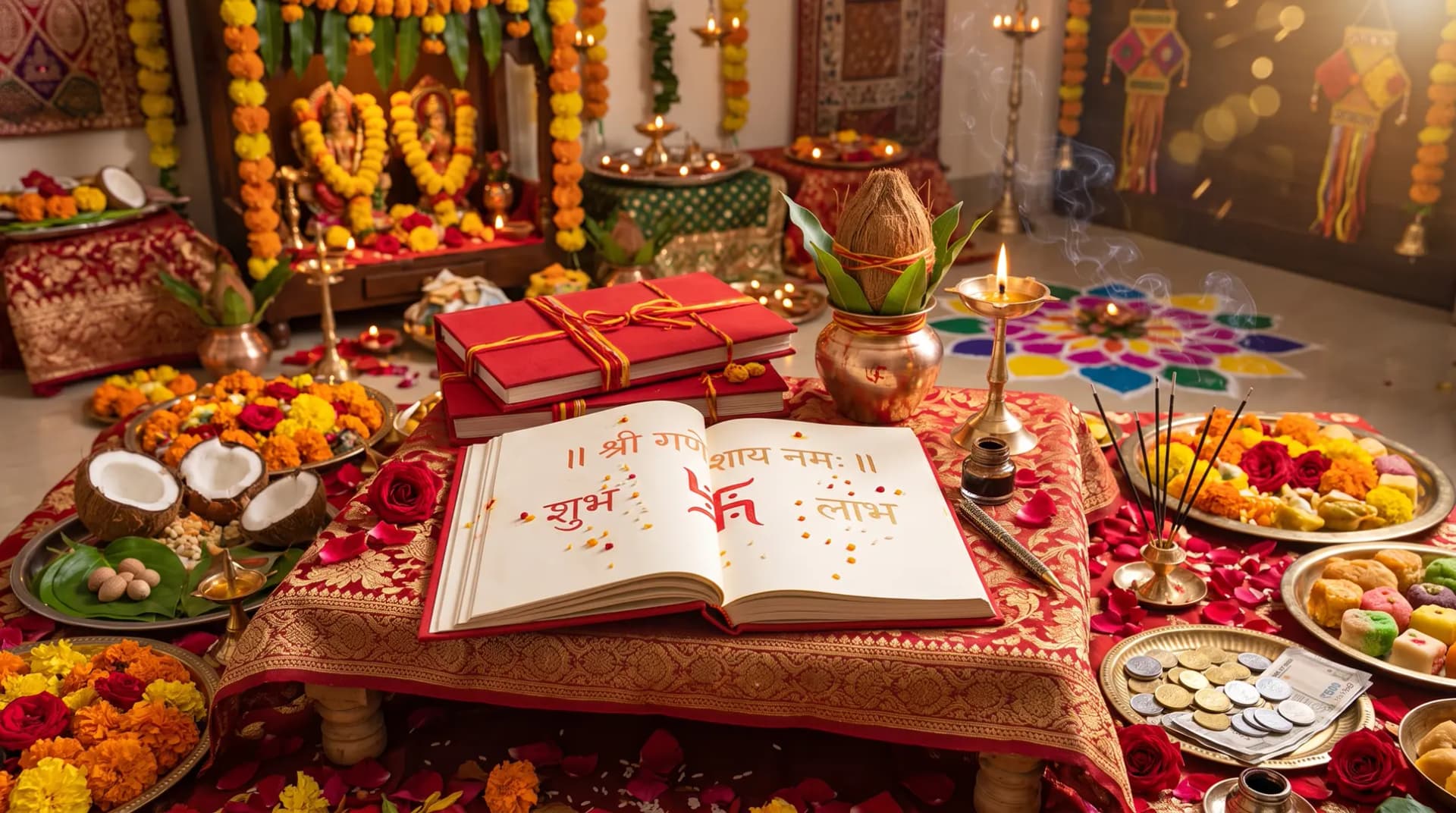
What you write in Chopda Pujan goes on the first page of the new chopda, in red ink or kumkum, with a new pen, before any entry is made. Here is the Chopda Pujan writing in Gujarati and Hindi, in the order most families follow.
- Shri Ganeshaya Namah (શ્રી ગણેશાય નમઃ / श्री गणेशाय नमः) written at the top centre, a salutation to Ganesha so the year begins with him.
- Swastik (સ્વસ્તિક / स्वस्तिक): drawn in kumkum at the centre of the page as a sign of auspiciousness.
- Shubh and Labh (શુભ, લાભ / शुभ, लाभ): written on either side of the swastik, meaning auspiciousness and gain. Some families put Shubh on the left, others on the right, so keep your family's custom.
- Shri Sava (શ્રી સવા / श्री सવા): written on every new book. It means one and a quarter, for Lakshmi with young Ganesha.
- Shri Saraswatyai Namah (શ્રી સરસ્વત્યૈ નમઃ / श्री सरस्वत्यै नमः): written below the swastik, a salutation to Sharda.
- Shri Lakshmiji Sada Sahay (શ્રી લક્ષ્મીજી સદા સહાય / श्री लक्ष्मीजी सदा सहाय): an optional line asking that Lakshmi stays with the business.
- Vikram Samvat, month, tithi and firm name (વિક્રમ સંવત / विक्रम संवत): written on the lower part of the page to record the new year in the Hindu calendar. If your accounts live on a laptop or in software, the same marks are drawn on a paper slip placed on the device or in a new diary kept beside it.
Jain Chopda Pujan Writing
- Shri Paramatmane Namah, Shri Gurubhyo Namah, Shri Saraswatyai Namah (શ્રી પરમાત્મને નમઃ, શ્રી ગુરુભ્યો નમઃ, શ્રી સરસ્વત્યૈ નમઃ): salutations to the Supreme, the gurus and Saraswati.
- Shri Gautam Swami ni labdhi hojo (શ્રી ગૌતમસ્વામીની લબ્ધિ હોજો): for gain.
- Shri Keshariyaji no bhandar bharpur hojo (શ્રી કેસરીયાજીનો ભંડાર ભરપૂર હોજો): for abundance.
- Shri Bharat Chakravarti ni riddhi hojo (શ્રી ભરત ચક્રવર્તીની રિદ્ધિ હોજો): for prosperity.
- Shri Bahubaliji nu bal hojo (શ્રી બાહુબલીજીનું બળ હોજો): for strength.
- Shri Abhaykumar ni buddhi hojo (શ્રી અભયકુમારની બુદ્ધિ હોજો): for intellect.
- Shri Kayavanna Sheth nu saubhagya hojo (શ્રી કયવન્ના શેઠનું સૌભાગ્ય હોજો): for good fortune.
- Shri Shalibhadra ni riddhi hojo (શ્રી શાલિભદ્રની રિદ્ધિ હોજો): for wealth.
Chopda Pujan Vidhi at Home
Chopda Pujan vidhi follows a Diwali Lakshmi puja with the account books at the centre. The order below is common in Gujarati homes and shops; other communities vary.
Close the old books.Settle dues and close the old year's accounts before Diwali. Clean the shop or puja room, then place the new chopda, pen and ink on a red cloth over a bajot.
Sankalp and Ganesh Puja.The pandit ji takes the sankalp (statement of intent) with your name, firm and place. Ganesha is worshipped first with kumkum, akshat, flowers and a sweet.
Kalash and Lakshmi Avahan.A kalash is set up and Lakshmi is invoked into her image with Vedic mantras. Many families recite Shri Suktam at this point.
Write the first page.With the new pen and red ink or kumkum, write Shri Ganeshaya Namah, the swastik, Shubh and Labh, and Shri Sava, as listed above. (Varies by family.)
Worship the chopda.Apply kanku, abil and gulal to each book. Offer akshat and flowers, tie mauli, and place a silver coin, paan and sopari on it. The book is now worshipped as Lakshmi.
Sharda Puja.Sharda (Saraswati) is worshipped on the books and pen for knowledge and sound judgment. Jain families invoke Gautam Swami at this step. (Varies by community.)
First entry.At the chosen muhurat, make the first symbolic entry in the new book. Some traders wait and make it on Labh Pancham, when the shop reopens. (Varies by family.)
Aarti and prasad.Perform the Lakshmi aarti, offer sweets and batasha, and share prasad with family and staff.
A family can close the books, write the first page, worship the chopda and do the aarti on its own. The sankalp, Lakshmi avahan and the recitation of Shri Suktam or the Lakshmi Sahasranama (thousand names) are where a pandit is traditionally needed.
Prayers and Mantras for Chopda Pujan
- Om Shri Ganeshaya Namah (Ganesha): said at the start and written at the top of the first page, so the year begins without obstacles.
- Shri Suktam (Lakshmi): a hymn from the khila (appendix) of the Rigveda, recited while Lakshmi is invoked.
- Om Aim Saraswatyai Namah (Sharda): said while worshipping the books and the pen.
- Gautam Swami Ashtak (Gautam Swami, Jain Sharda Pujan): eight verses recited by Jain families before the writing.
- Om Jai Lakshmi Mata (Lakshmi): the aarti sung at the close of the puja.
Book Chopda Pujan at Your Shop, Online or Abroad
Pandits Near Me is an online platform for booking verified Hindu pandits for pujas, havans and festival ceremonies, at home or by live video call, in India and abroad.
At your shop, office or home: A pandit ji performs the full Chopda Pujan with your books, from sankalp to aarti. You choose the puja language on the form, and the pandit ji, date and time are confirmed on the call.
Online e-puja: The pandit ji leads every step by live video call while your family writes the first page and worships the books at your own altar. The samagri is agreed with the pandit ji beforehand. You can also book an online Diwali Puja for the household Lakshmi puja.
Outside India: The Chopda Pujan muhurat is calculated for your own city, so it can differ from India, and the time is set in your local time zone. You arrange the samagri or ask the pandit ji to bring it, and diyas or incense may need adapting to building rules.
The cost of Chopda Pujan depends on its length, in-person or online mode, language, location and samagri, and is quoted on the confirmation call. Pandits are in high demand in Diwali week, so booking early helps.
Significance of Chopda Pujan
In Indian tradition, Chopda Pujan emphasizes ethical commerce, divine gratitude, and prosperous financial beginnings.

Gratitude for Prosperity
Acknowledging divine blessings for past business success and financial sustenance.

Ethical & Clear Accounts
Praying for integrity, clarity, and fairness in all trade transactions.

Auspicious Financial Year
Welcoming the new Vikram Samvat business year with high positivity and hope.

Wisdom Alongside Wealth
Venerating Saraswati and Ganesha alongside Lakshmi to guide wealth with wisdom.
Get Your
FREE
Janam Kundali
Personalized Horoscope, Dosha & Yoga Analysis, Planetary Insights and Predictions.




 100% Accurate Predictions
 Trusted by Lakhs of Users
 Secure & Private
 24×7 Expert Support100% Accurate PredictionsTrusted by Lakhs of UsersSecure & Private24×7 Expert Support100% Accurate PredictionsTrusted by Lakhs of UsersSecure & Private24×7 Expert Support
Why Choose Us?
For authentic rituals, trusted pandits, and a seamless experience that bring divine blessings to your life.
10+
Google Ratings
500+
Get Instant Panditji
100+
Pooja Available
100+
Verified Panditji

Loading reviews...
How It Works
See how it works and simplify your puja booking experience.

Select Your Puja

Provide Your Details

Get Call From Us

Puja Confirmed
Frequently Asked Questions
Chopda Pujan is the traditional worship of account books, ledgers, and financial records during Diwali. It is performed to invoke the blessings of Goddess Lakshmi, Lord Ganesha, and Goddess Saraswati for prosperity, success, and financial wisdom.
Chopda Pujan is celebrated on Diwali day (Kartik Amavasya) during auspicious Choghadiya and Pradosh muhurats, which usually falls in October or November.
To perform Chopda Pujan, clean your workplace or altar, place new ledgers or account books on a clean red cloth, draw the Swastika and write "Shubh Labh" with kumkum and turmeric. Light a diya, offer flowers, sweets, and fruits, chant mantras, and conclude with the Aarti.
