Perform Sacred Sapindikarana Puja with Verified Pandits
Book Your Puja
Tailored spiritual experiences for every need

What is Sapindikaranam?
Sapindikaranam is an important Hindu ritual performed as part of the final rites for a deceased person. The Sapindikarana meaning refers to the ceremonial union of the departed soul with the lineage of the ancestors, known as the Pitru. Through this ritual, the departed family member is traditionally offered prayers and pindas alongside the ancestors.
In many Hindu traditions, Sapindikaranam is associated with the completion of the mourning period and forms an important part of the post-death ceremonies. The exact timing and procedure may vary according to regional customs, family traditions, and the guidance of the officiating pandit. It is commonly connected with the 11th day death ceremony Sapindikarana, or the rituals performed around the eleventh, twelfth, or thirteenth day after death.
The 12 day rituals Sapindikaranam process, generally follow earlier ceremonies such as daily offerings, Pind Daan, Tarpan, and Shradh-related rites. During Sapindikaranam, specific pind offerings and mantras are used to symbolically connect the departed soul with the ancestral lineage.
The ceremony holds deep religious and emotional significance for the family, providing an opportunity to honor the deceased, fulfill traditional duties, and pray for peace and spiritual well-being. Since customs can differ between communities, a knowledgeable Vedic pandit can guide the family through the appropriate Sapindikaranam rituals and procedures.
Sapindikarana Vidhi
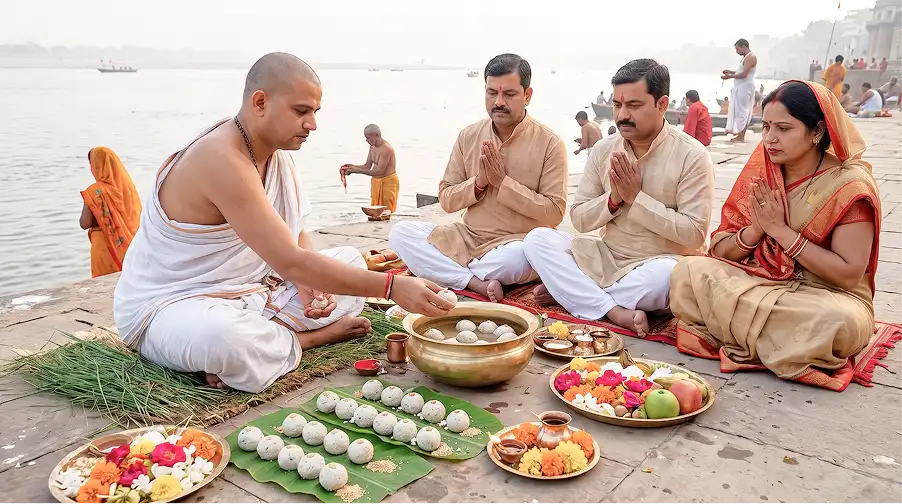
The Sapindikarana vidhi is performed under the guidance of a Vedic pandit, with the exact procedure varying according to regional and family traditions. The ceremony generally includes prayers, Pind Daan, Tarpan, and offerings made for the departed soul and ancestors.
Sankalp: The family begins by taking a sacred Sankalp, stating their intention to perform the ritual for the departed family member.
Invocation of Ancestors: The pandit invokes the departed soul and family ancestors through prescribed Vedic prayers and rituals.
Pind Preparation: Ponds are prepared using traditional ingredients such as cooked rice, sesame seeds, barley, ghee, and other required puja samagri.
Pind Offerings: During the Sapindikarana Puja, the prepared pinds are offered according to the prescribed ritual, symbolizing the spiritual connection of the departed with the ancestral lineage.
Sapindi Shradh: The Sapindikarana Shraddha ceremony is performed with specific offerings and prayers for the departed soul, marking an important stage in the post-death rites.
Mantra Chanting and Tarpan: The pandit recites the appropriate Sapindikarana Mantra while the family performs Tarpan and other prescribed offerings.
Prayers and Completion: The ceremony concludes with prayers, Dakshina, and blessings, completing the prescribed rites according to the family’s traditions and the pandit’s guidance.
Benefits of Sapindikarana
The significance of Sapindikarana lies in its role within Hindu post-death rituals and ancestral traditions. It is performed to honor the departed soul, complete prescribed rites, and symbolically establish its connection with the ancestral lineage.
Fulfills important religious duties toward the departed family member according to traditional Hindu customs.
Allows family members to offer pindas, Tarpan, prayers, and other sacred offerings with devotion.
Traditionally marks the departed soul’s transition into the ancestral lineage after the prescribed mourning rituals.
Provides spiritual and emotional closure to family members following the loss of a loved one.
Preserves ancestral traditions and allows families to continue important religious practices across generations.
Supports regional customs, including Sapindikarana shraddha in Bengali traditions, where specific rituals and procedures may be followed.
Respects practices such as Sapindikaranam in Telugu traditions, which may vary according to family and regional customs.
Gives families an opportunity to pray for the peace and spiritual well-being of the departed soul.
Helps complete an important stage of the traditional post-death ceremony under the guidance of an experienced Vedic pandit.
Provides a structured way for family members to express remembrance, gratitude, and respect toward their departed loved one.
Book Sapindikarana Online or In Person
Arrange your Sapindikarana Ceremony with verified pandits from Pandits Near Me who follow traditional Vedic practices and provide convenient online or in-person ceremony options.

Offline / Online Sapindikarana Puja
With Pandits Near Me, you can perform Sapindikarana through both offline and online services.

Offline Sapindikarana
Sapindikarana Performed By Vedic Pandit At Holy Places Or Your Location
- •Book a qualified pandit to perform the ceremony in person at your home or preferred location.
- •Perform the prescribed rituals, offerings, Shradh, and prayers in the pandit’s presence.
- •Suitable for families who wish to gather and perform the ceremony together in person.
- •Get assistance with puja preparations and guidance on the required samagri.
- •Book verified pandits with support from scheduling to the completion of the ceremony.

Online Sapindikarana
Sapindikarana Performed By Vedic Pandit On Video call
- •Participate in the ceremony remotely through a live video session from anywhere.
- •Receive guidance throughout the ritual while staying connected with the pandit online.
- •A convenient option for family members living in different cities or countries.
- •Coordinate the ritual remotely while following the required steps from home.
- •Access experienced Vedic pandits and complete the booking process conveniently online.
How We Help
See how it works and simplify your puja booking experience.

Select Your Puja

Provide Your Details

Get Call From Us

Puja Confirmed

Types of Shradh Puja We Offer
Choose the right Shradh Puja based on your family’s traditions and ancestral rituals.

Pitru Dosh Puja
Perform Pitru Dosh Puja to pacify ancestral souls, remove Pitru Dosha effects, and invite peace & prosperity.

Tripindi Shradh
Perform Tripindi Shradh to pacify unsettled souls, remove Pitru Dosha, and bring harmony to your family.
Narayan Nagbali Puja
Perform Narayan Nagbali Puja to resolve Pitru Dosha, remove obstacles, and attain divine blessings.

Pitru Paksha Shradh
Honor your forefathers during Pitru Paksha Shradh and perform sacred rituals for peace & liberation.
Loading reviews...
Frequently Asked Questions
The timing of Sapindikarana can vary according to regional and family traditions. In many customs, it is associated with the 11th, 12th, or 13th-day post-death rituals, while some traditions may follow a different schedule as guided by the family pandits.
Sapindikarana is a specific post-death rite associated with symbolically connecting the departed person with the ancestral lineage. Regular Shradh, on the other hand, is performed periodically to honor and offer prayers to ancestors.
During Sapindi Shradh, pindas and other prescribed offerings are made for the departed soul and the ancestors. The ritual is performed with prayers, Tarpan, and specific procedures under the guidance of a knowledgeable pandit.
Download our Application now!
Scan the QR code to get the User and Pandit ji app now