
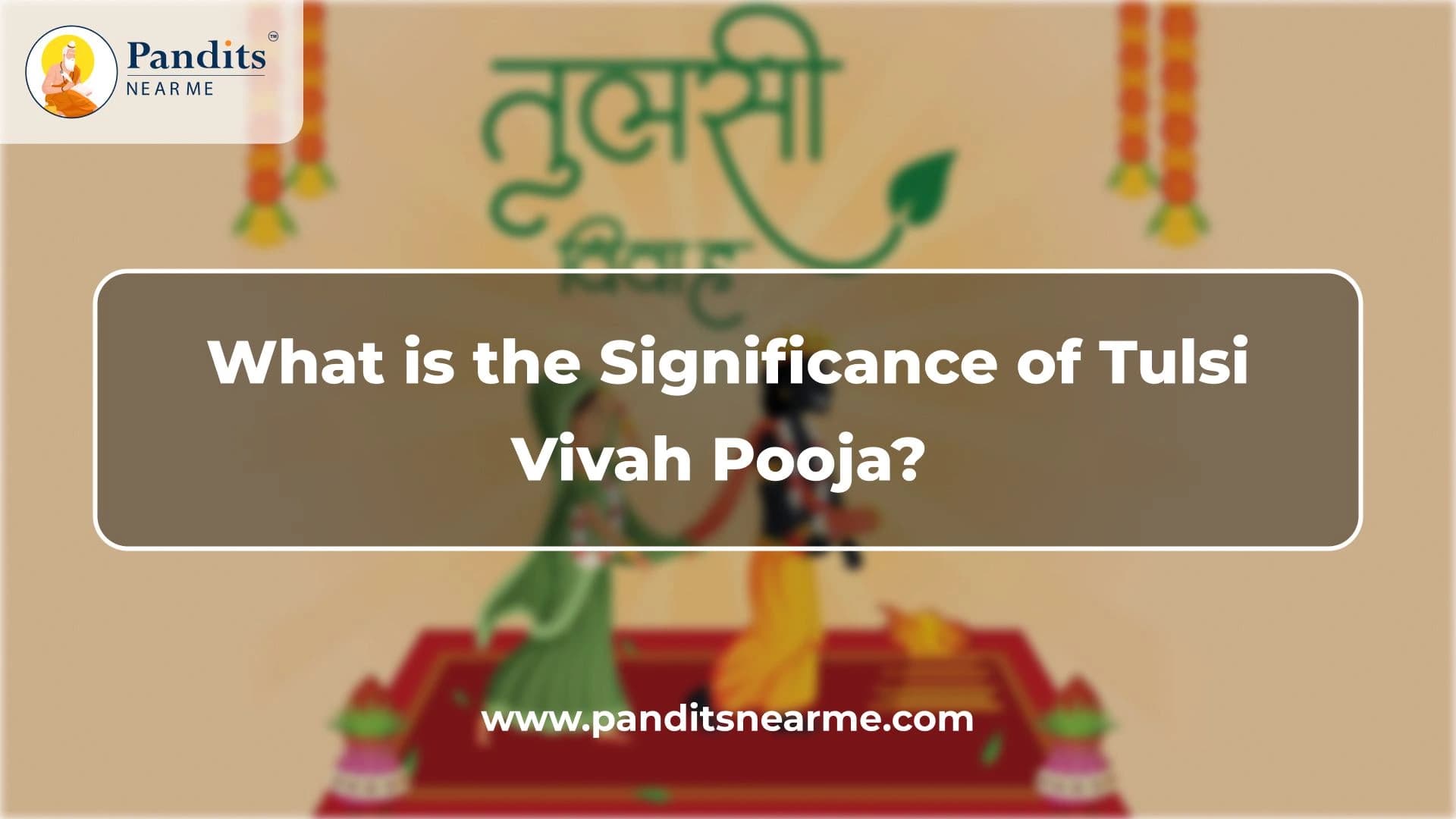


Hindu culture abounds with symbolic rituals celebrating the union of humanity and divinity. Among such, Tulsi Vivah holds a very sacred position. The ritual signifies the marriage of the sacred Tulsi plant (being a manifestation of Goddess Lakshmi) with Lord Vishnu or his avatar, Lord Krishna. It is the initiation of the auspicious Hindu wedding season and takes place with reverence all over India.
In this blog, we’ll explore the significance of Tulsi Vivah, its rituals, stories, and why this pooja continues to hold importance in Hindu households today.
What is Tulsi Vivah?
Tulsi Vivah is the ceremonial wedlock of the Tulsi plant, the earthly form of Goddess Lakshmi, with Lord Vishnu, one of the principal Gods of the Hindu trinity. The ritual is performed on Tulsi Pooja Date during the interval between Prabodhini Ekadashi (the 11th day of the bright fortnight of Kartik month) and Kartik Purnima (full moon day).
The wedding of Tulsi and Vishnu is celebrated with great zest and grandeur in temples and homes. Families decorate the Tulsi plant, sing Tulsi Vivah Mangalashtak, and perform rituals like a standard Hindu wedding.