


.webp&w=1920&q=75)


Astrology is an important part of Hindu traditions, especially regarding birth stars (Nakshatras). Among the 27 Nakshatras, Sataisa Nakshatra is considered very significant in Vedic astrology. It is believed to influence a child’s well-being and is often connected to karmic effects.
To remove negative impacts and bring prosperity, families perform rituals like Nakshatra Shanti Puja and Mool Nakshatra Shanti.
In this blog, we will explain what Sataisa Nakshatra is, its effects, the importance of Sataisa Puja, and provide a complete Sataisa Puja Samagri list in Hindi for performing the ritual correctly.
What is Sataisa Nakshatra?
In Hindu astrology, a newborn’s birth star (Nakshatra) greatly influences their life. If the child is born under a Gand Mool Nakshatra, it is considered sensitive and may require a special Nakshatra Puja to remove obstacles.
Sataisa Nakshatra Puja is performed to reduce the negative effects of these birth stars and bring harmony to the child’s life. The term “Sataisa” also refers to the 27th-day ceremony after birth, which is directly linked to the baby’s Nakshatra.
This puja is done to seek blessings, protect the newborn, and ensure a positive and prosperous future.
What is Mool Nakshatra?
The Mool Nakshatra is the 19th star in Vedic astrology and is believed to carry a strong connection with ancestral karma. A child born under this Nakshatra may face karmic influences, so families perform the Mool Nakshatra Shanti Puja during Sataisa to reduce negative effects and ensure the baby’s happiness and health.
What is Gandmool?
The term Gandmool is used when a child is born at the junction of Ganda (a sensitive point in the zodiac) and the Mool Nakshatra. This is considered an astrologically delicate time, and performing a Nakshatra Shanti Puja is recommended to balance energies and protect the child’s future.
Understanding Gand Mool Nakshatra
Before performing the Sataisa ritual, it’s important to know about the Gand Mool Nakshatras. Out of the 27 Nakshatras, six are considered Gand Mool:
Ashwini
Ashlesha
Magha
Jyeshtha
Moola
Revati
If a baby is born under any of these Nakshatras, it is believed their life may face challenges unless a Mool Nakshatra Shanti Puja or Gand Mool Nakshatra Puja is performed to remove negative effects and bring balance.
Role of Nakshatra Shanti Puja
Nakshatra Shanti Puja is a Vedic ritual done to reduce the negative effects of a child’s birth star. For babies born under Gand Mool Nakshatras, it is considered essential. This puja helps bring positive energy, removes obstacles, and ensures a smoother life path for the child.
Why is Sataisa Nakshatra Puja Important?
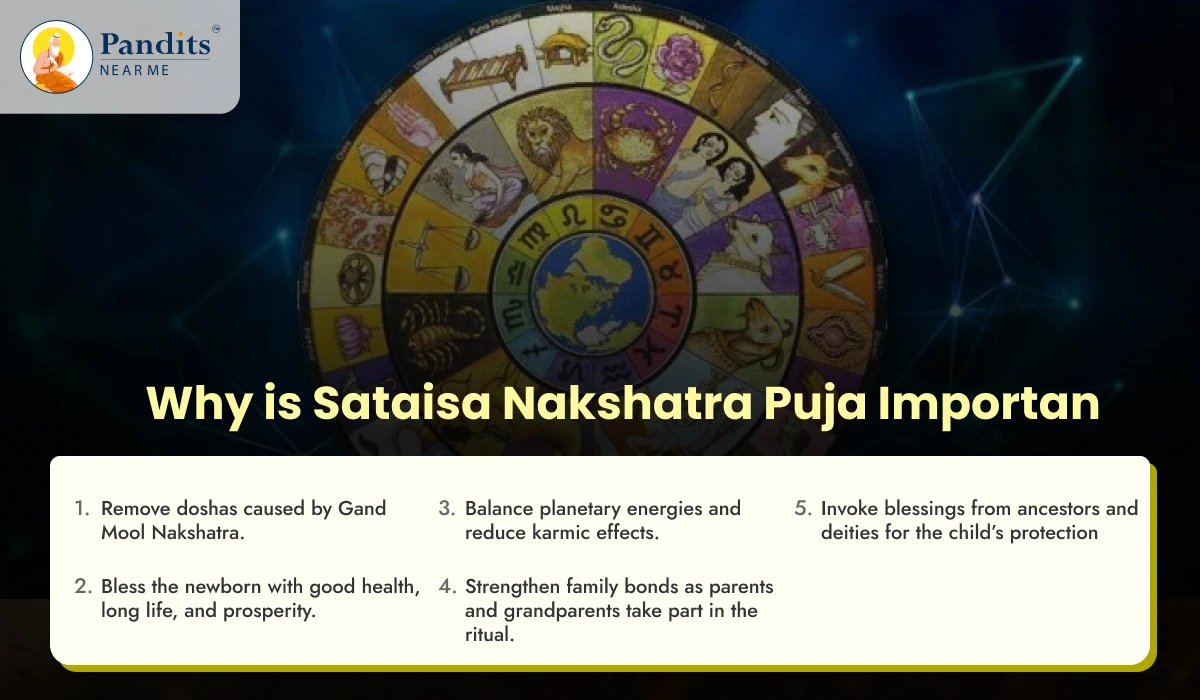
Performing the Sataisa Nakshatra Puja is believed to:
Remove doshas caused by Gand Mool Nakshatra.
Bless the newborn with good health, long life, and prosperity.
Balance planetary energies and reduce karmic effects.
Strengthen family bonds as parents and grandparents take part in the ritual.
Invoke blessings from ancestors and deities for the child’s protection.
This puja is usually done on the 27th day after birth, which is why it is called Sataisa (from “Satais,” meaning twenty-seven).
When Should You Perform Sataisa Puja?
On the 27th day after the baby’s birth.
On the same Nakshatra day under which the child was born if the 27th day doesn’t match.
In some traditions, for babies born under Gand Mool Nakshatra, the puja is done when that Nakshatra repeats after birth.
The exact muhurat and timing are usually decided by an astrologer or family priest.
Sataisa Puja Samagri List in Hindi
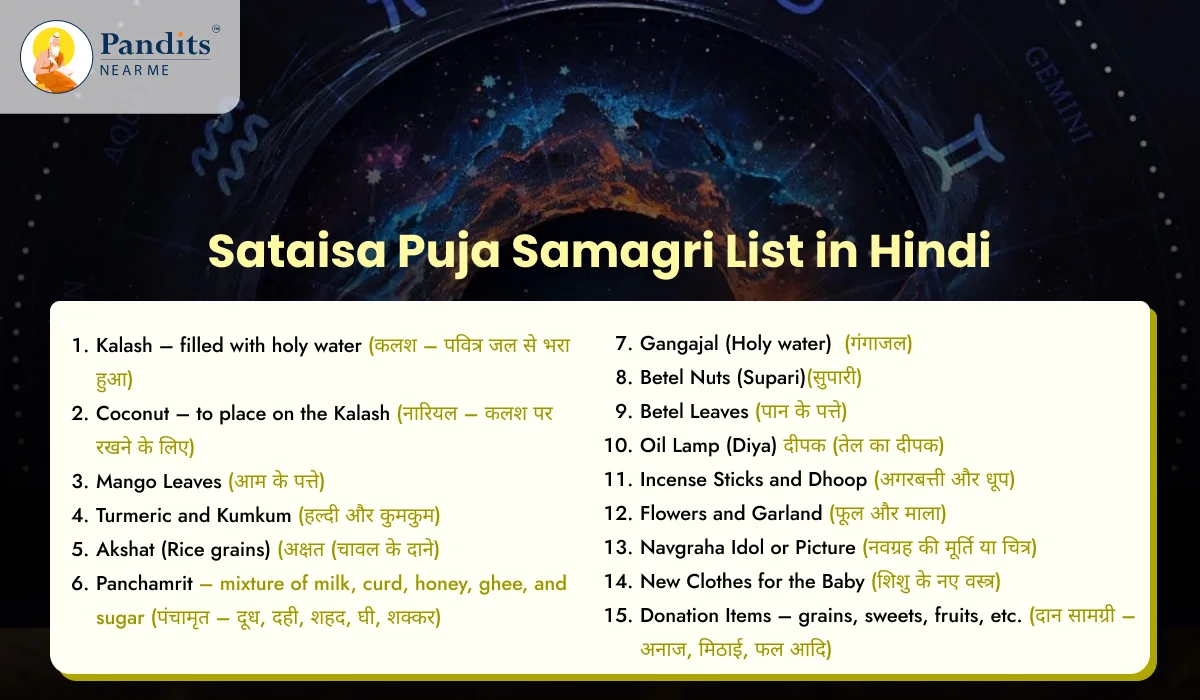
Kalash – filled with holy water (कलश – पवित्र जल से भरा हुआ)
Coconut – to place on the Kalash (नारियल – कलश पर रखने के लिए)
Mango Leaves (आम के पत्ते)
Turmeric and Kumkum (हल्दी और कुमकुम)
Akshat (Rice grains) (अक्षत (चावल के दाने)
Panchamrit – mixture of milk, curd, honey, ghee, and sugar (पंचामृत – दूध, दही, शहद, घी, शक्कर)
Gangajal (Holy water) (गंगाजल)
Betel Nuts (Supari)(सुपारी)
Betel Leaves (पान के पत्ते)
Oil Lamp (Diya) दीपक (तेल का दीपक)
Incense Sticks and Dhoop (अगरबत्ती और धूप)
Flowers and Garland (फूल और माला)
Navgraha Idol or Picture (नवग्रह की मूर्ति या चित्र)
New Clothes for the Baby (शिशु के नए वस्त्र)
Donation Items – grains, sweets, fruits, etc. (दान सामग्री – अनाज, मिठाई, फल आदि)
How to Perform Sataisa Nakshatra Puja?
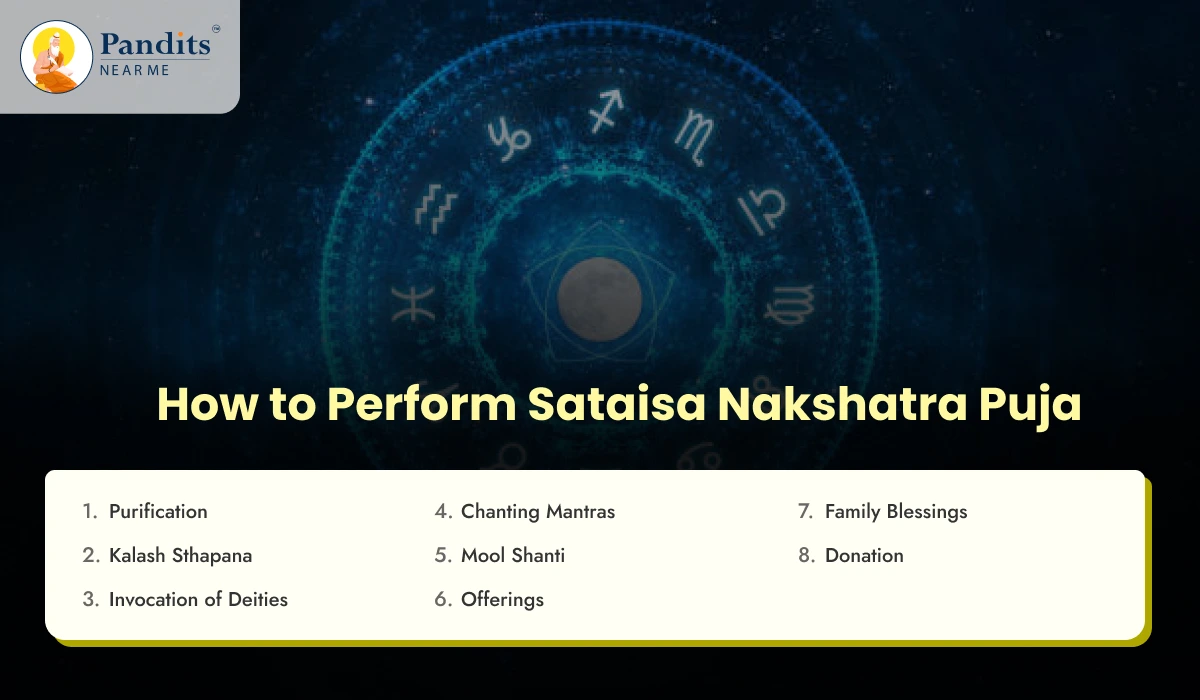
Purification: Clean the puja area and sprinkle Gangajal to purify the surroundings.
Kalash Sthapana: Place a Kalash filled with holy water, topped with a coconut and mango leaves as a symbol of prosperity.
Invocation of Deities: Begin the puja by invoking Lord Ganesha to remove obstacles and worship the Navgrahas to balance planetary energies.
Chanting Mantras: Recite mantras specific to the child’s Nakshatra along with prayers to the family deity.
Mool Shanti: If the baby is born under a Gand Mool Nakshatra, perform the Mool Nakshatra Shanti Puja to neutralize malefic effects.
Offerings: Present flowers, fruits, sweets, and light a diya as part of the offerings.
Family Blessings: Parents and grandparents bless the child using rice grains mixed with turmeric.
Donation: Donate food, clothes, or grains to Brahmins and the needy to complete the ritual.
This step-by-step process ensures the puja is performed correctly and invokes blessings for the child’s health, prosperity, and well-being.
Also read this article: Importance of Karwa Chauth Puja in Strengthening Marital Bond
Mantras and Chants Used in Sataisa Puja
The mantras recited during the Sataisa Nakshatra Puja are believed to remove negative influences and invite divine blessings for the newborn.
1. Ganesh Invocation
ॐ गं गणपतये नमः
Om Gam Ganapataye Namah
Recited at the beginning to remove obstacles and ensure the puja goes smoothly.
2. Nakshatra Shanti Mantra
ॐ अश्विनी अश्लेषा मघा ज्येष्ठा मूल रेवती नक्षत्रेभ्यः शान्तिं कुरु कुरु स्वाहा।
Om Ashwini Ashlesha Magha Jyeshtha Moola Revati Nakshatrebhyaḥ Shantim Kuru Kuru Swaha
Chanted to pacify the Gand Mool Nakshatras and bring balance to the child’s life.
3. Mool Nakshatra Mantra
ॐ मूलाय नमः
Om Moolaya Namah
Specifically recited if the baby is born under Mool Nakshatra to reduce karmic effects and ensure well-being.
4. Navgraha Mantra
ॐ आदित्याय च सोमाय मङ्गलाय बुधाय च। गुरु शुक्र शनिभ्यश्च राहवे केतवे नमः॥
Om Adityaya Cha Somaya Mangalaya Budhaya Cha, Guru Shukra Shanibhyashcha Rahave Ketave Namah
Invoked to balance the planetary energies and seek protection from all nine celestial bodies.
Benefits of Performing Sataisa Nakshatra Puja
Removes Doshas: Helps neutralize planetary doshas and karmic imbalances.
Health & Longevity: Ensures the newborn’s good health and long life.
Spiritual Growth: Strengthens the family’s spiritual connection.
Prosperity & Harmony: Brings peace, prosperity, and happiness to the household.
Gand Mool Relief: Reduces the negative effects of Gand Mool Nakshatra.
Regional Traditions of Sataisa Puja
North India: Sataisa is performed on the 27th day with detailed rituals and blessings from family elders.
South India: The ceremony is often combined with the Namakaran (naming ceremony).
Bihar & Uttar Pradesh: Many families merge Sataisa Nakshatra Puja with Chhathi Puja for combined blessings.
Scientific and Spiritual Significance
Protection & Positivity: The ritual creates a safe and positive aura around the newborn.
Family Bonding: Brings the entire family together, strengthening emotional connections.
Environmental Purification: Chanting mantras and performing homa purifies the surroundings, bringing peace and calmness.
Conclusion
The Sataisa Nakshatra Puja plays a vital role in giving your newborn a blessed and harmonious start in life. By performing Mool Nakshatra Shanti or Gand Mool Nakshatra Puja, families invite prosperity, protection, and positive planetary influences for their child’s future.
To conduct the ceremony with proper rituals and authentic Vedic mantras, having a knowledgeable priest is essential
How can Pandits Near Me help with Sataisa Puja?
At Pandits Near Me, we connect you with experienced Vedic priests to perform Sataisa Nakshatra Puja, Mool Nakshatra Shanti, and Gand Mool Nakshatra Puja with complete authenticity.
Expert Pandits for accurate rituals
Complete Puja Samagri support
Online & in-person booking options
Pre-book your Pandit today with Pandits Near Me and ensure divine blessings for your little one’s future!